

Führerschein Schnellkurs Schweiz
Add a reviewOverview
-
Sectors Neurology
-
Posted Jobs 0
-
Viewed 34

Company Description
What Is The Genuine German Driving License Term And How To Make Use Of It
Understanding the Genuine German Driving License: A Comprehensive Guide
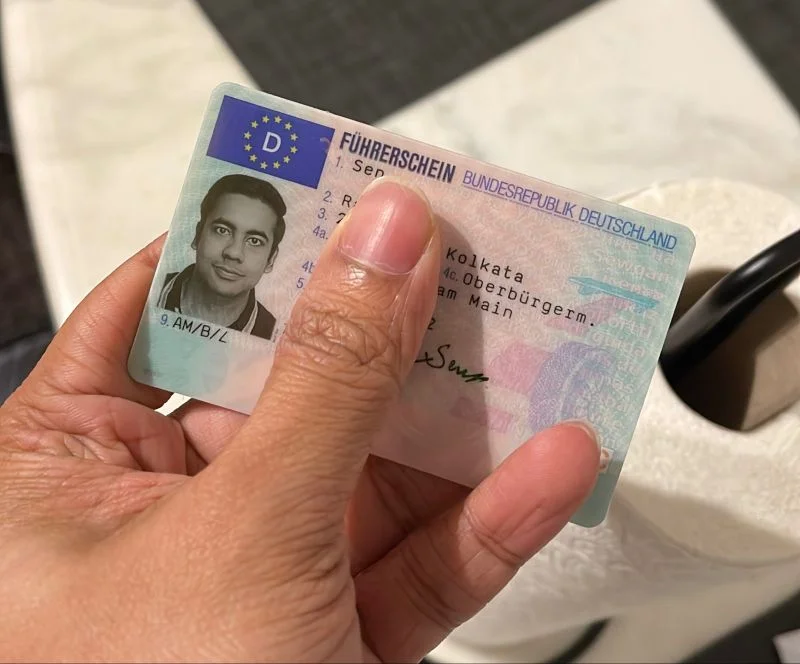
Navigating the world of driving licenses can be an overwhelming job, specifically when it comes to acquiring a real German driving license (legaler Deutscher Führerschein im Ausland Führerschein (babayopriorities.com)). Known for its stringent policies and extensive testing processes, Germany ensures that all residents and residents who wish to operate lorries satisfy particular requirements of competence. In this blog site post, we will look into the basics of the German driving license, examining its types, application procedure, required documents, and frequently asked concerns.
Types of German Driving Licenses
The German driving license is categorized into various classes, depending upon the kind of car the holder is permitted to drive. The following table details the main types of licenses and their particular automobile classifications:
| License Class | Kind of Vehicle | Minimum Age |
|---|---|---|
| Class A | Motorbikes (unrestricted) | 24 (or 20 with 2 years of experience) |
| Class A1 | Light motorbikes (up to 125cc) | 16 |
| Class B | Automobiles (as much as 3.5 lots) and trailers (as much as 750 kg) | 18 |
| Class BE | Automobiles with trailers (over 750 kg, total weight not surpassing 3.5 lots) | 18 |
| Class C | Trucks (over 3.5 loads) | 21 |
| Class CE | Trucks with trailers (over 750 kg) | 21 |
| Class D | Buses | 24 |
| Class DE | Buses with trailers | 24 |
Bottom line:
- Each class features its own set of credentials and German driving license for sale training requirements.
- The minimum age varies depending upon the power and weight of the automobile.
Application Process for a Genuine German Driving License
Obtaining an authentic German driving license includes a number of steps. Below, we describe the standard process for acquiring a Class B license:
Step 1: Requirements
Before using, ensure you fulfill the following requirements:
- Age: At least 18 years of ages.
- Residency: Must be a homeowner of Germany or have a legitimate house license.
- Health: Complete a vision test and, for certain licenses, a medical exam.
Action 2: Choose a Driving School
Register in a licensed driving school (Fahrschule). Germany mandates theoretical and useful guideline. Look for a school with a good reputation and buy a80 driving license qualified instructors.
Action 3: Theoretical Training
Go to theoretical classes (minimum of 14 lessons) covering topics such as traffic guidelines, vehicle operation, and safe driving practices. Individuals take a theoretical test after completing the course.
Step 4: Practical Training
Participate in useful driving lessons. The number of lessons varies based upon individual progress, but a minimum of 12 driving sessions is needed.
Step 5: Exams
- Theoretical Exam: Pass a written test that assesses your understanding of roadway rules.
- Practical Exam: A road test evaluated by a main inspector that shows your driving abilities.
Action 6: Application Submission
When you pass both tests, collect the required documents and send your application to the local motorist’s licensing authority (Fahrerlaubnisbehörde).
Needed Documents:
- Completed application form
- Evidence of identity (e.g., passport or ID card)
- Residency registration (Meldebescheinigung)
- Health certificate (Sehtest and ggf. MPU)
- Proof of finished driving lessons
- Payment of fees
Charges and Expected Timeline
The expenses associated with acquiring a German driving license can differ substantially based on area, the driving school selected, and private preparation. Below is a table summarizing normal expenditures:
| Expense Type | Approximated Amount (EUR) |
|---|---|
| Driving School Fees | 1,500 – 2,500 |
| Application Fee | 40 – 60 |
| Evaluation Fees (theoretical) | 20 – 30 |
| Assessment Fees (useful) | 90 – 150 |
| Health Certificate | 20 – 50 |
| Overall Estimated Cost | 1,700 – 2,800 |
Anticipated Timeline:
The entire procedure normally takes between 3 to 6 months. People who can dedicate to classes and practice routinely might complete it more quickly.
Frequently Asked Questions (FAQ)
1. Can foreign nationals make an application for a German driving license?
Yes, foreign nationals living in Germany can look for a German driving license. Nevertheless, if you currently have a driving license from another EU nation or a recognized international license, the procedure might vary.
2. Is it possible to convert a foreign driving license into a German one?
Yes, depending on the nation of origin. EU licenses are usually recognized and can be exchanged without further testing. Non-EU licenses may require extra tests or accreditations.
3. What happens if I fail the driving test?
You can retake the driving test after a waiting period. Nevertheless, there are limitations on the number of retakes over a specified timeframe, so it’s important to prepare completely for each effort.
4. Do I need to register my driving license in Germany if I’m just visiting?
No, if you are simply visiting Germany and hold a legitimate driving license from your home nation, you do not need to register it. An International Driving Permit (IDP) might be advisable for non-EU license holders.
5. Can I drive in Germany with an IDP?
Yes, an International Driving Permit is appropriate in Germany, offered it is held alongside your initial license.
Getting a genuine German driving license is a multi-step process that involves mindful preparation and adherence to guidelines. As Germany is known for its stringent road security measures, the strenuous approach to licensing adds to safer roads for all. By comprehending the types of licenses, application treatments, and common questions, prospective chauffeurs can browse the process with self-confidence, guaranteeing they are well-equipped to become accountable road users in Germany.
